Healthy snacks can do more than fill the space between meals. A well-chosen snack can add fruit, vegetables, protein, fiber, whole grains or nutritious fats to the day while keeping hunger manageable until the next meal.
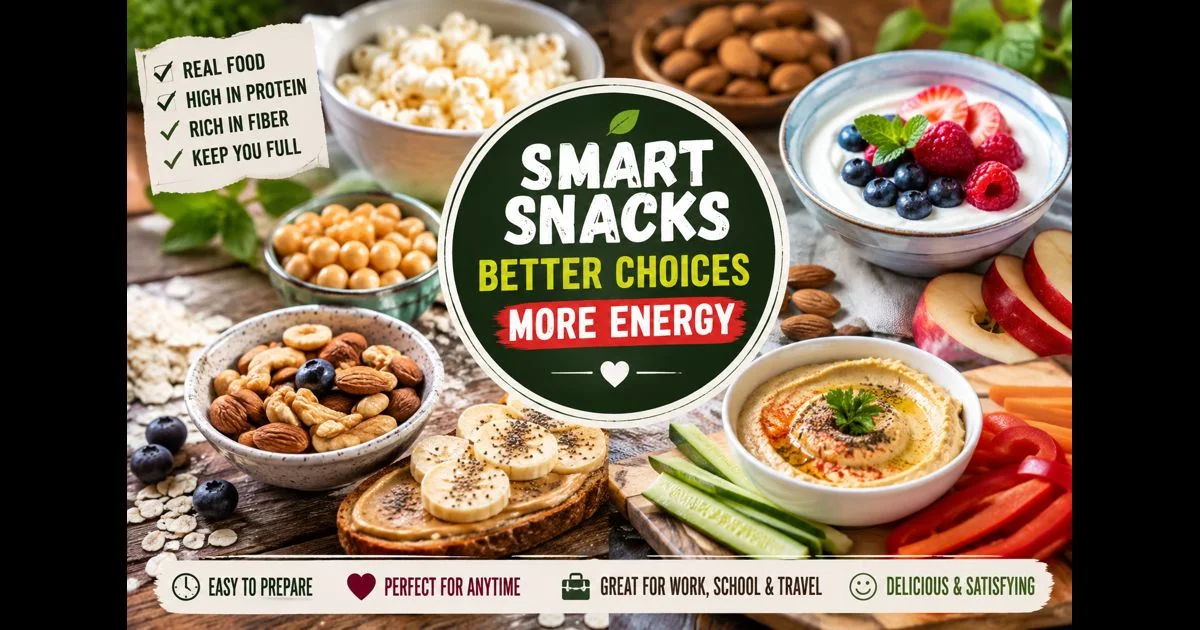
The simplest approach is to choose a nutrient-dense food and, when you need something more substantial, pair it with a second food that brings a different nutritional strength. An apple with peanut butter, vegetables with hummus, yogurt with berries, or whole-grain crackers with cheese are useful examples because each combination offers more than quick calories alone.
What Makes a Snack Healthy?
There is no single food or calorie number that makes every snack healthy.
A useful snack usually has one or more of these qualities:
- It contains a meaningful source of protein, fiber or both.
- It includes fruit, vegetables, whole grains, dairy, legumes, nuts, seeds or another nutrient-dense food.
- It satisfies hunger without routinely replacing a balanced meal.
- It keeps added sugars and excessive sodium from dominating the choice.
- Its portion matches how hungry you actually are.
A piece of fruit can be enough when you only need a light bite. After a long gap between meals, fruit paired with yogurt, nuts or nut butter will usually make a more substantial snack.
The same principle works for savory foods. Raw vegetables provide crunch and fiber, while hummus adds chickpeas, fat and some protein. Whole-grain crackers become more satisfying when paired with cheese, tuna, hummus or another protein-rich topping.
An Easy Formula for Building Better Snacks
Instead of memorizing dozens of combinations, start with one food from each of two groups.
Choose a fiber-rich or produce-based food, such as fruit, vegetables, oats, popcorn, beans or a whole-grain food.
Then add a protein or nutrient-dense partner, such as yogurt, cottage cheese, eggs, hummus, nuts, seeds, nut butter, edamame or cheese.
The result can be as simple as:
- Banana with peanut butter
- Berries with plain yogurt
- Pear with walnuts
- Carrots with hummus
- Apple with almonds
- Whole-grain toast with nut butter
- Cucumber with cottage cheese
- Whole-grain crackers with tuna
- Edamame with fruit
- Popcorn with a small portion of nuts
Not every snack has to contain every macronutrient. The purpose of pairing foods is simply to create something more nourishing and satisfying when hunger calls for it.
Healthy Snacks When You Want Something Sweet
Fruit is one of the easiest foundations for a sweet snack because sweetness comes packaged with water, fiber, vitamins, minerals and plant compounds.
Fresh berries with yogurt provide contrasting texture and do not require added syrup. An apple or pear pairs well with peanut, almond or sunflower seed butter. Frozen grapes or banana slices can satisfy the desire for something cold and sweet.
Other practical choices include:
- Plain Greek yogurt with berries and cinnamon
- Banana with peanut or almond butter
- Apple slices with walnuts or pecans
- Chia pudding with fresh fruit
- Oatmeal with berries and cinnamon
- Cottage cheese with peaches or pineapple
- Unsweetened dried fruit with nuts
- Dates paired with nuts or nut butter
Dried fruit can be useful when portability matters, but its smaller volume makes it easy to eat a large amount quickly. Pairing a modest portion with nuts or seeds creates a more substantial snack.
For yogurt, oatmeal and similar foods, fruit, cinnamon, vanilla or unsweetened cocoa can provide flavor without requiring a large amount of added sugar.
Healthy Savory Snacks
A savory snack does not have to mean chips or crackers eaten straight from a large bag.
Try foods that bring crunch, protein or fiber:
- Carrots, cucumber or bell pepper with hummus
- Roasted chickpeas
- Shelled edamame
- Hard-boiled eggs with sliced vegetables
- Whole-grain crackers with cheese
- Tomato with cottage cheese
- Air-popped popcorn
- Avocado on whole-grain toast
- Unsalted or lightly salted nuts
- Tuna with cucumber slices or whole-grain crackers
- Plain yogurt mixed with herbs as a vegetable dip
Seasoning can make simple foods much more appealing. Paprika, black pepper, garlic, cinnamon, lemon, herbs and other spices can add flavor without turning the snack into a complicated recipe.
High-Protein Healthy Snacks
Protein can be especially useful when a snack needs to bridge a longer interval between meals.
Convenient protein-containing choices include Greek yogurt, cottage cheese, eggs, edamame, beans, lentils, hummus, nuts, seeds, nut butter, cheese, tuna and other minimally processed protein foods.
Good combinations include:
Greek yogurt and berries: yogurt supplies protein while berries add fiber and fruit.
Egg and fruit: easy to prepare ahead and useful for a work or school day.
Edamame: one of the few snacks that works well on its own because soybeans naturally provide both protein and fiber.
Cottage cheese and tomatoes: a simple savory option with protein and produce.
Hummus and vegetables: chickpeas contribute plant protein and fiber, while vegetables add volume and crunch.
Nuts and fruit: particularly useful when refrigeration is unavailable.
Protein bars can also be convenient, but a large protein number on the front of the package should not be the only factor used to judge one. Ingredients, added sugar, sodium, serving size and overall nutritional value still matter.
High-Fiber Healthy Snacks
Fiber-rich snacks can help increase the contribution of fruits, vegetables, legumes and whole grains across the day.
Useful choices include:
- Raspberries, blackberries, pears or apples
- Roasted chickpeas
- Edamame
- Vegetables with hummus
- Air-popped popcorn
- Chia pudding
- Oatmeal
- Nuts and seeds
- Whole-grain crackers
- Avocado on whole-grain toast
Combining a fiber-rich food with a protein source makes a particularly versatile snack. Examples include berries with Greek yogurt, apple with peanut butter, whole-grain crackers with cheese, or vegetables with hummus.
Healthy Snacks for Work
The best office snack is one you can realistically store and eat.
If a refrigerator is available, useful options include yogurt, cottage cheese, hard-boiled eggs, vegetables with hummus and fruit with cheese.
For a desk drawer or work bag, choose shelf-stable foods such as:
- Nuts
- Seeds
- Roasted chickpeas
- Whole-grain crackers
- Plain popcorn
- Unsweetened dried fruit
- Nut-butter packets
- Shelf-stable tuna packets where appropriate
- Whole fruit such as apples, bananas, pears or oranges
Portioning larger packages at home can make grab-and-go eating easier and prevents the package itself from determining how much you eat.
Healthy Snacks for Travel and Busy Days
Travel snacks need to survive time outside the kitchen.
Apples, oranges and bananas are naturally portable. Nuts, seeds, roasted chickpeas and suitable whole-grain crackers require no refrigeration. Nut butter can turn fruit or crackers into a more substantial option.
For longer trips, an insulated bag expands the choices to yogurt, cheese, vegetables, hummus and other chilled foods.
Convenience matters. A nutritionally excellent snack that is difficult to carry will not help much when hunger strikes halfway through a commute or road trip.
Healthy Snacks for Kids
Children need foods appropriate for their age, development, allergies and chewing ability, so portions and textures should be adjusted accordingly.
For children who can safely eat the foods involved, simple combinations may include:
- Yogurt with soft fruit
- Banana with an appropriate nut or seed butter
- Cheese with fruit
- Hummus with age-appropriate vegetables
- Oatmeal with fruit
- Whole-grain toast with avocado
- Egg with fruit
Whole nuts, hard raw foods and other choking hazards are not suitable for young children unless prepared in an age-appropriate form.
A snack also does not need to imitate a dessert or cartoon-shaped packaged food to appeal to children. Familiar foods served consistently and in manageable portions can work well.
How to Choose a Packaged Healthy Snack
Packaged foods are not automatically poor choices. They can make healthy eating considerably easier when time, refrigeration or food preparation is limited.
Ignore most front-of-package marketing at first and turn the package over.
Check the serving size
Nutrition numbers apply to the stated serving. A package that looks like one portion may contain more than one.
Look for useful nutrients
Depending on the food, protein and dietary fiber can make a snack more substantial. Whole-food ingredients such as oats, beans, nuts, seeds, fruit or whole grains can also be a useful sign of nutritional value.
Check added sugars
Naturally occurring sugars in whole fruit and plain dairy are different from sugars added during manufacturing. Sweetened yogurts, bars, cereals and snack foods can vary dramatically, so compare similar products rather than assuming they are equivalent.
Compare sodium
Crackers, popcorn, jerky, roasted snacks and flavored nuts can differ significantly in sodium. Comparing labels within the same category is often more useful than trying to classify an entire type of food as good or bad.
Read the ingredient list
The ingredient list can tell you what the product is primarily made from. A snack built mainly around oats, nuts, seeds, beans or another recognizable food may offer something different nutritionally from one made mostly from refined starches, sugars and flavorings.
No single label number should decide whether a snack fits your diet. Evaluate the product as a whole.
Are Granola Bars Healthy Snacks?
Some are; some are closer to candy bars with oats.
A useful granola or snack bar may contain oats, nuts, seeds or fruit and provide fiber or protein without relying heavily on added sugars.
When comparing two bars, examine:
- Serving size
- Protein
- Dietary fiber
- Added sugars
- Sodium
- The first several ingredients
A bar can be convenient, but convenience does not make it nutritionally superior to a banana with peanut butter, yogurt with fruit, or a handful of nuts.
Are Nuts Healthy Even Though They Are High in Calories?
Yes, nuts can fit very well into a healthy eating pattern.
Almonds, walnuts, pistachios, peanuts and other nuts provide protein, unsaturated fats and other nutrients. Their energy density simply means portion size deserves attention.
A modest serving can be paired with fruit when more volume is desired. Unsalted or lightly salted versions can also help keep sodium lower.
Seeds such as pumpkin, sunflower, chia and flax can provide many of the same practical advantages.
Is Popcorn a Healthy Snack?
Plain or lightly seasoned popcorn can be an excellent whole-grain snack.
The nutritional profile changes when large amounts of butter, sugar, caramel or salty flavor coatings are added. Air-popped popcorn or popcorn prepared with a modest amount of oil gives you more control over those additions.
For greater staying power, popcorn can be paired with nuts, cheese or another protein-containing food.
Snacks That Look Healthy but Need a Closer Look
Words such as “natural,” “protein,” “veggie,” “multigrain” or “made with fruit” do not provide enough information on their own.
Veggie chips may still be made primarily from refined starch and oil. Fruit snacks may contain little whole fruit. Granola can contain substantial added sugar. Sweetened yogurt can vary widely from plain yogurt. Protein cookies can still be cookies.
None of these foods needs to be forbidden. The important point is that the health halo on the package should not replace the Nutrition Facts panel and ingredient list.
Portion Size Should Match Hunger
There is no universal snack portion for every person or every day.
A small piece of fruit may be enough an hour before dinner. After exercise or during a six-hour gap between meals, a larger snack containing several food groups may make more sense.
Start with the purpose of the snack:
Light hunger: fruit, vegetables, yogurt or a modest portion of nuts may be enough.
Moderate hunger: combine two components, such as fruit with yogurt or vegetables with hummus.
Very hungry and the next meal is far away: a more substantial mini-meal—such as whole-grain toast with egg and avocado—may make more sense than repeatedly eating tiny snacks.
Responding to actual hunger is often more useful than forcing every snack into the same calorie target.
20 Easy Healthy Snack Ideas
When you need something quick, these combinations require little or no cooking:
- Apple with peanut butter
- Greek yogurt with berries
- Carrots with hummus
- Pear with walnuts
- Banana with almond butter
- Cottage cheese with tomatoes
- Air-popped popcorn
- Edamame
- Roasted chickpeas
- Whole-grain toast with avocado
- Hard-boiled egg with fruit
- Cucumber with hummus
- Oatmeal with berries
- Whole-grain crackers with cheese
- Bell pepper with guacamole
- Chia pudding with fruit
- Pistachios with an orange
- Plain yogurt with banana and cinnamon
- Whole-grain crackers with tuna
- Celery with peanut or seed butter
The best choice depends less on finding a perfect food and more on choosing something that fits your hunger, schedule, nutritional needs and next meal.
How to Keep Healthy Snacks Available
Good intentions are less useful when every nourishing option requires washing, chopping or cooking at the moment you become hungry.
Keep a few options ready:
Wash fruit that can be refrigerated ahead of time. Portion hummus into small containers. Cook several eggs at once. Keep plain yogurt where it is easy to see. Divide nuts or popcorn into practical portions. Store shelf-stable fruit and whole-grain foods where they are easy to grab.
The environment around a food choice often matters as much as the recipe.
Frequently Asked Questions
What are the healthiest snacks to eat?
There is no single healthiest snack. Fruits, vegetables, yogurt, eggs, nuts, seeds, legumes and whole grains can all make nutritious snacks. Combining foods that provide fiber and protein is an easy way to make a snack more substantial.
What is a quick healthy snack?
An apple with peanut butter, yogurt with berries, carrots with hummus, fruit with nuts, a hard-boiled egg, edamame or air-popped popcorn are all quick options.
What healthy snacks can I keep at work?
Nuts, seeds, roasted chickpeas, whole fruit, plain popcorn, nut-butter packets, unsweetened dried fruit and appropriate whole-grain crackers work well without refrigeration. Yogurt, eggs, cheese, vegetables and hummus are additional choices when a refrigerator is available.
Are packaged snacks unhealthy?
Not necessarily. Packaged food can be convenient and nutritious. Compare serving size, ingredients, dietary fiber, protein, added sugars and sodium rather than judging a food only by packaging or marketing claims.
What healthy snacks are filling?
Snacks that combine protein, fiber or nutritious fats tend to be more substantial than foods made mainly from refined carbohydrates or added sugars. Examples include yogurt with berries, apple with peanut butter, vegetables with hummus, edamame and nuts with fruit.
Can healthy snacks include carbohydrates?
Yes. Fruit, vegetables, oats, beans and whole grains all contain carbohydrates and can be part of nutritious snacks. The source and overall combination matter more than avoiding carbohydrates as a category.
A Better Way to Think About Snacking
Healthy snacks do not need special powders, expensive products or complicated recipes.
Start with familiar nutrient-dense foods. Add a second food when you need more staying power. Let portions reflect actual hunger. For packaged choices, look beyond marketing and compare the Nutrition Facts panel and ingredients.
Fruit with nuts, vegetables with hummus, yogurt with berries, eggs with produce, whole grains with protein and other simple combinations can turn an ordinary snack into a useful part of the day's nutrition.