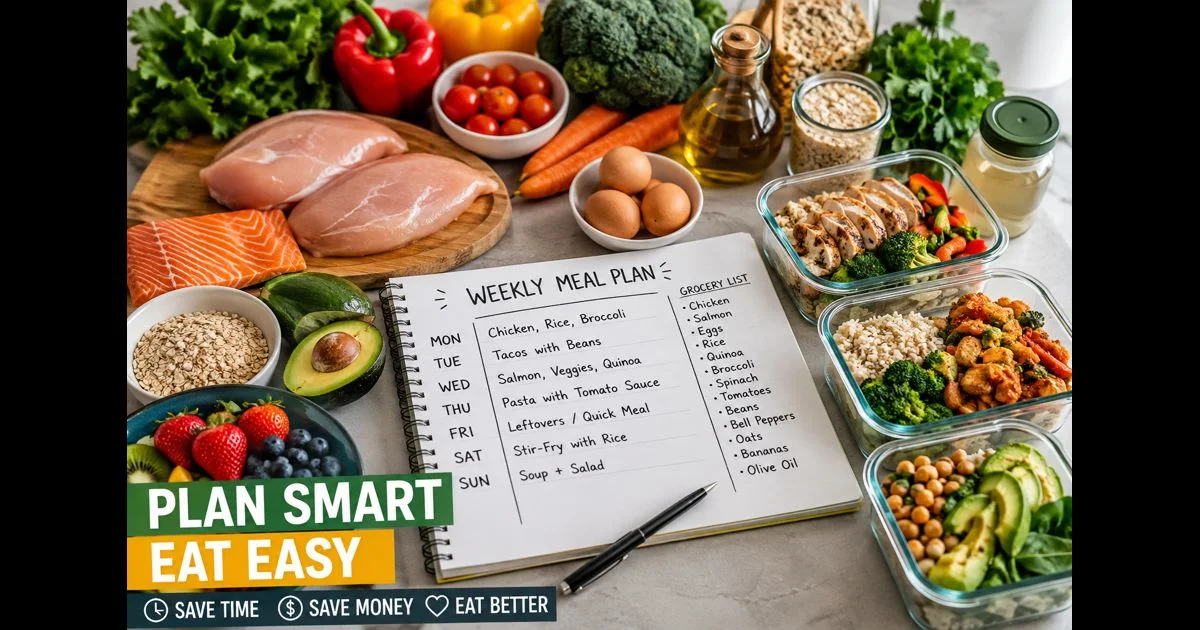
Meal planning for beginners works best when it is simple: decide which meals you actually need for the coming week, check the food you already have, choose a small number of easy meals, and buy only the ingredients needed to complete them.
You do not need to plan 21 different meals or spend Sunday cooking everything for the week. A useful meal plan should make everyday eating easier while leaving enough flexibility for leftovers, schedule changes, eating out, and nights when cooking is the last thing you want to do.
What Is Meal Planning?
Meal planning means deciding what you are going to eat before it is time to prepare the meal.
A weekly plan might include every breakfast, lunch, dinner, and snack. It can also be as simple as planning five dinners and keeping breakfast and lunch flexible.
Meal planning is also different from meal prep. Planning is deciding what you will eat and what ingredients you need. Meal prep is doing some of the cooking, chopping, portioning, or other preparation in advance.
You can meal plan without meal prepping at all.
For a first attempt, concentrate on the meals that usually cause the most difficulty. If dinner is when you tend to run out of ideas, start by planning dinners rather than trying to organize your entire diet at once.
Start With Your Real Week
Before choosing recipes, look at your calendar.
A meal that makes sense on a quiet Saturday may be unrealistic on a Wednesday when you arrive home late. Mark the evenings when you have work commitments, appointments, children's activities, travel, social plans, or other reasons that could affect dinner.
Match the amount of cooking to the amount of time available.
A practical week could look like this:
|
Day |
Schedule |
Best type of dinner |
|
Monday |
Normal evening |
Freshly cooked meal |
|
Tuesday |
Busy |
20-minute meal |
|
Wednesday |
Home late |
Leftovers |
|
Thursday |
Normal evening |
Freshly cooked meal |
|
Friday |
Uncertain |
Flexible or freezer meal |
|
Saturday |
More time |
Longer recipe |
|
Sunday |
Home |
Cook extra for Monday |
Planning around your schedule prevents one of the most common problems with weekly menus: choosing meals you will not realistically have time or energy to make.
Check the Refrigerator, Freezer, and Pantry First
Before writing a grocery list, see what is already available.
Start with foods that need to be used soon. Half a bag of spinach, several ripe tomatoes, an open container of yogurt, or vegetables approaching the end of their useful life can influence the first meals you choose.
Then check the freezer for meat, fish, vegetables, bread, cooked meals, and other useful ingredients.
Finally, review pantry staples such as:
- Rice
- Pasta
- Oats
- Beans
- Lentils
- Canned tomatoes
- Tuna
- Tortillas
- Bread
- Cooking oils
- Herbs and spices
- Nuts and seeds
This simple inventory reduces duplicate purchases and gives you a starting point instead of a blank meal-planning page.
Choose a Few Reliable Meals
Your first week is not the time to choose seven unfamiliar recipes.
Begin with meals you already know how to prepare and add one new recipe if you want more variety.
A useful dinner rotation might include:
- Tacos or burrito bowls
- Pasta with vegetables and a protein
- Chicken, potatoes, and roasted vegetables
- Stir-fry with rice
- Soup with bread or a sandwich
- Eggs with vegetables and toast
- A bean or lentil bowl
Familiar meals require fewer decisions, and their ingredients are usually easier to substitute when something changes.
Once planning becomes routine, new recipes can be added without making the entire week depend on unfamiliar cooking.
Build Meals From Components
Instead of treating every dinner as an entirely separate recipe, think in components.
A practical meal usually has a protein source, vegetables or fruit, a carbohydrate or grain where appropriate, and something that provides flavor or texture.
For example, chicken, rice, peppers, lettuce, beans, salsa, and tortillas can become several different meals:
Meal 1: Chicken rice bowl with peppers and salsa
Meal 2: Chicken tacos with lettuce and beans
Meal 3: Rice and bean bowl with leftover vegetables
The meals are different, but the shopping list stays manageable.
The same principle works with vegetarian ingredients. Lentils can become soup, a grain bowl, or taco filling. Roasted vegetables can accompany dinner one night and go into a wrap or salad the next day.
This approach reduces both preparation time and the number of partially used ingredients left in the refrigerator.
Use a Simple Balanced-Meal Framework
You do not need to calculate every nutrient to plan everyday meals.
For general meal planning, regularly include vegetables and fruit, protein foods, grains or other carbohydrate sources, and sources of unsaturated fats while varying foods across the week.
Protein choices can include poultry, fish, eggs, beans, lentils, tofu, yogurt, or other foods appropriate for your preferences.
Carbohydrate options might include potatoes, oats, rice, pasta, bread, tortillas, or whole grains.
Vegetables can be fresh, frozen, or canned depending on availability, cost, and convenience.
Rather than trying to make every individual plate perfect, look at the overall pattern of meals across several days.
People with allergies, medical conditions, pregnancy-related nutrition needs, or prescribed diets may need individualized guidance from an appropriate healthcare professional or registered dietitian.
Plan Leftovers Before You Cook
Leftovers work much better when they are intentional.
If Tuesday is going to be particularly busy, Monday's dinner can be cooked in enough quantity to provide Tuesday's meal.
You can also reuse components without eating exactly the same dinner twice.
For example:
Monday: Roast chicken, potatoes, and broccoli
Tuesday lunch: Chicken sandwich with fruit
Wednesday: Chicken and vegetable wraps
Another option is to freeze an extra serving rather than keeping it in the refrigerator for later in the week.
The important point is to decide what the extra food is for. Otherwise, leftovers often become forgotten containers rather than part of the plan.
Put Perishable Foods Earlier in the Week
Not every ingredient has the same useful storage life.
Meals involving delicate greens, fresh herbs, ripe produce, fresh seafood, or other highly perishable ingredients are generally better scheduled soon after shopping.
Later meals can rely more heavily on ingredients with longer storage lives, such as frozen vegetables, canned beans, pasta, rice, eggs, or freezer items.
This creates a natural order for the week and can reduce food waste.
Create the Grocery List From the Plan
Once your meals are selected, write down every ingredient they require.
Then subtract what you already have.
Instead of:
Monday → buy onions
Tuesday → buy onions
Thursday → buy onions
combine the amount needed for the week.
Organizing the finished list by grocery-store section can also make shopping quicker:
Produce: spinach, broccoli, peppers, onions, bananas, apples
Protein: chicken, eggs, beans, yogurt
Grains and starches: oats, rice, pasta, tortillas
Refrigerated: milk, cheese
Pantry: canned tomatoes, salsa
Frozen: mixed vegetables
Before shopping, check quantities carefully. A recipe serving four may produce too much food for one person but exactly the right amount for a couple who wants lunch leftovers.
Keep Two Backup Meals Available
A meal plan should survive a bad day.
Keep ingredients for one or two meals that require little preparation and do not spoil quickly.
Possible backup meals include:
- Pasta with canned tomatoes and frozen vegetables
- Eggs and toast
- Bean and cheese quesadillas
- Soup with bread
- Rice with frozen vegetables and eggs
- A freezer meal prepared earlier
Backup meals matter because schedules change. You might work later than expected, forget to thaw an ingredient, or simply not want the meal written on the calendar.
Using the backup option is not failing at meal planning. The backup is part of the plan.
A Simple 7-Day Meal Plan for Beginners
Here is an example of how a flexible first week could work.
|
Day |
Breakfast |
Lunch |
Dinner |
|
Monday |
Oatmeal, banana, yogurt |
Turkey or hummus wrap with vegetables |
Chicken, rice, and roasted vegetables |
|
Tuesday |
Eggs and whole-grain toast |
Leftover chicken rice bowl |
Bean and vegetable tacos |
|
Wednesday |
Oatmeal with fruit |
Taco bowl using leftover beans |
Pasta with tomato sauce, spinach, and a protein of choice |
|
Thursday |
Yogurt, oats, and fruit |
Leftover pasta with vegetables |
Sheet-pan fish or tofu, potatoes, and broccoli |
|
Friday |
Eggs and toast |
Sandwich, vegetables, and fruit |
Leftovers or a backup meal |
|
Saturday |
Oatmeal with fruit and nuts |
Bean or chicken wrap |
Homemade stir-fry with rice |
|
Sunday |
Eggs with vegetables and toast |
Leftover stir-fry |
Soup, bread, and salad |
This is a framework, not a prescribed diet. Portions, ingredients, snacks, and meal frequency should be adjusted for appetite, household size, preferences, dietary needs, and schedule.
Prep Only What Will Actually Help
Meal preparation does not have to occupy an entire afternoon.
After shopping, consider which small jobs will save meaningful time during the week.
You might:
- Wash vegetables
- Chop onions or peppers needed soon
- Cook a batch of rice or another grain
- Prepare overnight oats
- Make a sauce or dressing
- Portion snacks
- Cook a protein for upcoming meals
Do not prepare ingredients merely because meal-prep routines say you should. Some foods are better prepared closer to serving, and unnecessary preparation creates more work rather than less.
Repeat Ingredients, Not Every Meal
Ingredient overlap is one of the easiest ways to make meal planning economical without eating the same dinner repeatedly.
Suppose you buy broccoli, peppers, chicken, rice, tortillas, beans, eggs, spinach, yogurt, and fruit.
Those ingredients can support rice bowls, tacos, stir-fry, wraps, breakfasts, and lunches.
The goal is to give each major ingredient more than one useful destination.
Before finalizing the shopping list, ask:
Where will the rest of this ingredient go?
If a recipe requires a special ingredient that will only be used once, decide whether you have another use for it or whether a substitute already in the kitchen would work.
Keep Breakfast and Lunch Easier
Beginners often make meal planning harder by trying to create a different recipe for every meal.
Breakfast and lunch are usually easier to manage with a small rotation.
Three breakfasts could be enough:
- Oatmeal with fruit
- Eggs and toast
- Yogurt with oats, fruit, and nuts
Lunch can frequently come from dinner leftovers, sandwiches, wraps, soups, or simple grain bowls.
That leaves most of your planning energy for dinner, where advance decisions often have the greatest practical benefit.
Do Not Plan Every Minute of the Week
A rigid plan can become useless after one unexpected event.
Leave some flexibility.
For many households, planning four or five dinners is more realistic than scheduling seven freshly cooked dinners. One evening can be assigned to leftovers and another kept open for a freezer meal, restaurant meal, social event, or change of plans.
Meals can also move between days.
If Thursday's dinner sounds better on Tuesday, switch them. The purpose of a meal plan is to remove unnecessary decisions, not create rules that cannot be changed.
Common Meal-Planning Mistakes
Choosing Too Many New Recipes
Every unfamiliar recipe adds shopping, preparation, and cooking decisions. Keep most meals familiar while you establish the habit.
Ignoring the Calendar
A 90-minute dinner recipe is unlikely to help on the busiest evening of your week. Schedule meals according to available time.
Buying Ingredients Before Checking the Kitchen
This creates duplicates and can increase food waste. Inventory first, then shop.
Planning Meals That Do Not Share Ingredients
Seven completely unrelated recipes often create an unnecessarily long grocery list. Look for useful ingredient overlap.
Forgetting Leftovers
If a dinner produces four servings and only two will be eaten, decide where the remaining servings belong before cooking.
Having No Backup
Plans change. Keep at least one easy alternative available.
Making the System Too Complicated
You do not need a special app, elaborate spreadsheet, or color-coded calendar. A notebook, phone note, calendar, or piece of paper can work perfectly well.
A 15-Minute Weekly Meal-Planning Routine
Once you have practiced a few times, planning can become a short weekly habit.
Minutes 1–3: Check your schedule.
Minutes 4–6: Look through the refrigerator, freezer, and pantry.
Minutes 7–10: Choose the main meals and assign leftovers.
Minutes 11–13: Write down the missing ingredients.
Minutes 14–15: Check the list for quantities, backup meals, and ingredients that could go unused.
Save successful weeks instead of starting from zero every time. After several weeks, you will have a collection of meal combinations that can be reused and adjusted.
What to Do When the Plan Falls Apart
Sometimes a planned dinner does not happen.
First, check whether its ingredients can safely move to another day. If highly perishable food is involved, prioritize it or freeze it when appropriate.
Then use the leftover, freezer, or backup meal already built into the week.
Do not redesign the entire schedule because one evening changed. Move meals where necessary and continue.
A useful meal plan bends without becoming irrelevant.
Frequently Asked Questions
How do I start meal planning for the first time?
Start with the coming week's schedule, check the food already at home, and choose three to five familiar dinners. Assign leftovers where useful, add one or two backup meals, and create a grocery list only for ingredients you are missing.
How many meals should a beginner plan?
There is no required number. Planning only dinners is a manageable starting point. Breakfasts and lunches can use a small rotation of familiar foods until planning becomes easier.
Is meal planning the same as meal prepping?
No. Meal planning is deciding what you intend to eat. Meal prepping means preparing some or all of that food ahead of time. You can use either practice independently.
How can I meal plan without eating the same food every day?
Reuse ingredients rather than complete meals. Roasted chicken, for example, can appear with vegetables one evening and in a wrap or grain bowl later.
How can meal planning reduce food waste?
Check existing food before shopping, schedule perishable ingredients early, choose meals with overlapping ingredients, plan how leftovers will be used, and freeze appropriate extras before they are forgotten.
Do I need a meal-planning app?
No. A paper calendar, notebook, spreadsheet, or phone note is enough. The best method is the one you can update quickly and use consistently.
What if I do not want the meal I planned?
Swap it with another meal from the same week or use your backup meal. Meal planning should provide choices and structure rather than lock you into a fixed menu.
Final Thoughts
Meal planning for beginners becomes much easier when the first goal is not perfection but fewer unnecessary decisions.
Start with the week you actually have. Use food already in your kitchen, choose a few familiar meals, reuse ingredients intelligently, plan leftovers on purpose, shop from a focused list, and keep an easy backup available.
After a few weeks, the process becomes less about creating a new menu from scratch and more about adjusting a system you already know works.