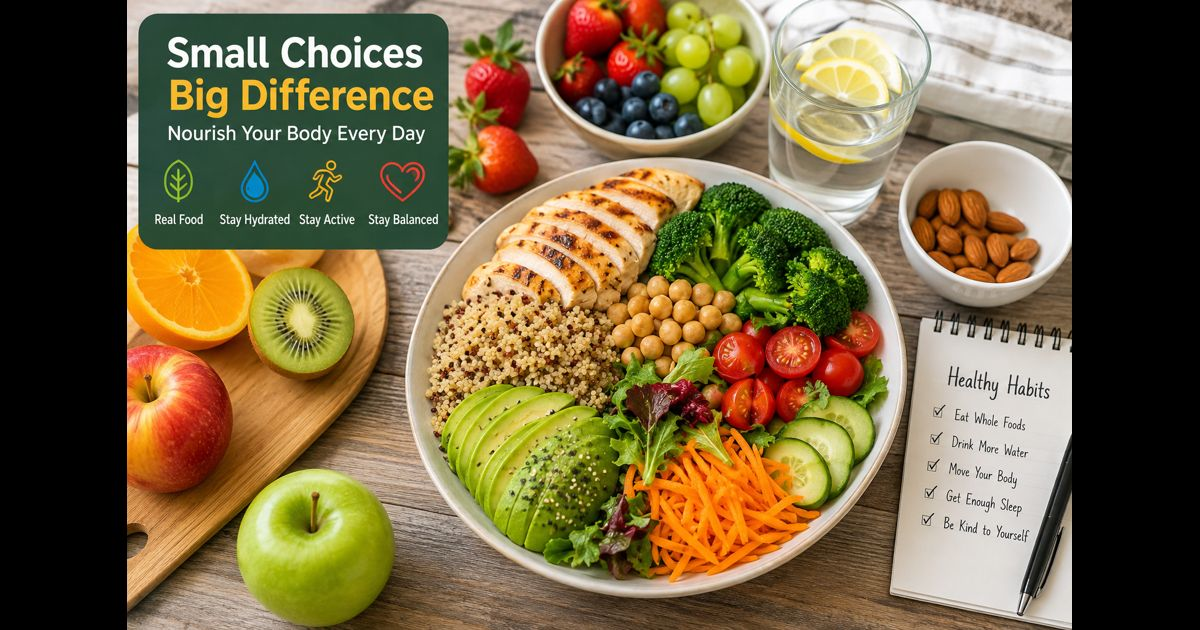
Healthy eating habits are the everyday choices that make nutritious food easier to eat consistently: building balanced meals, choosing drinks wisely, planning for busy days, and making room for enjoyment without turning food into a source of guilt.
A healthy pattern does not require perfect meals, expensive ingredients, or cutting out every food you like. It is built from foods that provide fiber, protein, vitamins, minerals, and satisfying energy—most often vegetables, fruit, beans, whole grains, nuts, seeds, dairy or fortified alternatives, and protein foods such as fish, eggs, poultry, tofu, or lentils. The best approach is one that suits your culture, budget, cooking skills, schedule, and health needs.
Begin with a balanced plate, not strict rules
A useful meal pattern is simple:
- Fill about half the plate with vegetables and fruit.
- Add a quarter of the plate as whole grains or other high-fiber starches.
- Add a quarter as a protein food.
- Include a source of unsaturated fat when it adds flavor or satisfaction, such as olive oil, avocado, nuts, seeds, or peanut butter.
This is a flexible visual guide, not a test. A bowl of lentil soup with whole-grain bread and a side salad, eggs with vegetables and oats, or rice with beans, roasted vegetables, and yogurt can all fit. Mixed dishes count too; look at the ingredients across the full meal instead of judging one food in isolation.
For a broader explanation of food groups and practical meal structure, see this balanced diet guide.
Build meals around foods that keep you satisfied
Hunger is not a failure of willpower. Meals that are too small or lack protein and fiber can leave you looking for quick energy later. Aim to include at least two of these meal-building elements:
- Protein: beans, lentils, eggs, fish, poultry, tofu, yogurt, cottage cheese, nuts, or seeds.
- Fiber-rich carbohydrates: oats, whole-grain bread, brown rice, quinoa, corn, beans, fruit, and vegetables.
- Color and volume: vegetables and fruit add nutrients, texture, and variety.
- Flavorful fats: olive oil, tahini, nuts, seeds, avocado, and nut butters can make a meal more enjoyable.
For example, plain toast may not keep someone full for long. Whole-grain toast with eggs, hummus, or peanut butter plus fruit is a more substantial option. The goal is not to make every meal large; it is to make it nourishing enough for the time between meals.
Make vegetables and fruit easier to use
Fresh produce is excellent, but frozen and no-salt-added canned options are nutritious, convenient choices as well. Keeping a few forms available lowers the chance that food goes unused.
Try practical defaults:
- Add frozen vegetables to soups, stir-fries, pasta sauces, omelets, and rice dishes.
- Keep fruit where it is visible and easy to take along.
- Choose pre-washed greens or chopped vegetables when time is limited.
- Add berries, banana, or apple slices to oatmeal, yogurt, or cereal.
- Make one vegetable a non-negotiable part of lunch or dinner rather than waiting for an elaborate recipe.
Variety matters more than chasing a single “superfood.” Different colors and types of produce contribute different nutrients, so rotate what is available, affordable, and appealing.
Choose whole grains more often
Whole grains retain more of the grain than refined versions and are a dependable source of fiber. Oats, brown rice, whole-wheat bread, whole-grain pasta, barley, popcorn, quinoa, and corn are accessible starting points.
You do not need to replace everything overnight. Start with one reliable swap: oatmeal instead of a sugary breakfast pastry, brown rice on some nights, or whole-grain bread for sandwiches. Check the ingredient list when buying packaged bread or cereal; a whole grain should appear near the beginning rather than relying only on front-of-pack wording.
Treat drinks as part of the meal
Beverages can quietly shape eating habits. Water is a dependable default for thirst, meals, and daily routines. Unsweetened tea, coffee, and sparkling water can add variety.
Sugary drinks are easy to consume quickly without providing much fullness. Instead of demanding an immediate stop, make a specific change that feels realistic: keep cold water nearby, order an unsweetened drink with meals, dilute juice, or reserve soda for occasions you genuinely enjoy.
Milk, fortified soy beverages, and other options can fit different dietary needs. Choose based on preference, tolerance, nutrition needs, and advice from a clinician when relevant.
Use packaged foods with more confidence
Packaged food is not automatically poor nutrition. Canned beans, frozen vegetables, plain yogurt, whole-grain bread, nut butter, and canned fish can be useful staples. The Nutrition Facts label helps compare similar products without getting distracted by marketing.
When comparing two options, look at the serving size first, then check:
- Fiber: higher is usually helpful.
- Added sugars: lower is usually helpful, especially for foods eaten often.
- Sodium: compare brands; lower-sodium choices can make a meaningful difference.
- Saturated fat: compare alternatives when choosing foods you eat regularly.
- Protein: useful when deciding whether a snack or meal will be satisfying.
The FDA notes that 5% Daily Value or less is low, while 20% or more is high for a nutrient. In general, choose foods more often that are higher in fiber, vitamin D, calcium, iron, and potassium, and lower in saturated fat, sodium, and added sugars.
Plan for the moments when choices are hardest
Healthy habits usually break down at predictable times: rushed mornings, long workdays, grocery gaps, travel, and late-afternoon hunger. Planning for these moments is more useful than relying on motivation.
Keep a short list of meals you can make without much thought:
- Eggs, whole-grain toast, and fruit
- Yogurt with oats, fruit, and nuts or seeds
- Bean tacos with salsa and vegetables
- Rotisserie chicken or tofu with bagged salad and microwaveable whole grains
- Lentil soup with a sandwich or salad
- Frozen vegetables, rice, and an egg, tofu, or canned salmon
A small weekly plan reduces repeat decisions and food waste. This meal planning for beginners guide can help turn a few dependable meals into an easier weekly routine.
Keep snacks practical, not perfect
A snack is useful when it helps you stay comfortable and focused between meals. Pairing a carbohydrate or fruit with protein, fiber, or fat usually provides more staying power than candy or chips alone.
Good examples include:
- Apple slices with peanut butter
- Plain yogurt with berries
- Carrots or cucumbers with hummus
- Whole-grain crackers with cheese
- A banana with a small handful of nuts
- Roasted chickpeas
- Popcorn with nuts or yogurt on the side
For more everyday combinations, browse these healthy snack ideas.
Eat with attention when you can
Mindful eating does not require a silent room or a complicated ritual. It means checking in with the meal rather than eating entirely on autopilot.
A few simple habits can help:
- Sit down for at least one meal or snack each day.
- Put a portion on a plate or bowl instead of eating from the package.
- Pause halfway through and notice whether you are still hungry, comfortably satisfied, or eating because food is there.
- Keep screens away for meals that matter most to you.
- Eat slowly enough to notice taste, texture, and fullness.
This is not about controlling every bite. It is about creating enough awareness to make choices that reflect what you actually need.
Make room for food you enjoy
A sustainable eating pattern has room for birthday cake, restaurant meals, cultural celebrations, takeout, and favorite comfort foods. Calling foods “good” or “bad” can create an all-or-nothing cycle: one less-nutritious meal feels like failure, then the rest of the day follows it.
A more useful response is to return to your usual pattern at the next meal. Add vegetables or fruit, choose a satisfying protein, drink water, and move on. One meal does not define your health, just as one salad does not create it.
Improve one habit at a time
Large, restrictive overhauls tend to be short-lived. Choose one clear action for the next week:
- Add a vegetable to dinner four nights this week.
- Replace one sugary drink each day with water or unsweetened tea.
- Prepare two grab-and-go breakfasts.
- Include beans, lentils, fish, eggs, tofu, or another protein food in lunch.
- Keep two satisfying snack options available.
- Cook one extra meal at home.
Make the action specific enough to do, not vague enough to postpone. Once it becomes ordinary, add another habit.
When personal advice matters
General healthy eating guidance cannot replace individualized care. Speak with a registered dietitian or qualified clinician if you are pregnant, managing diabetes, kidney disease, digestive disease, food allergies, an eating disorder, unexplained weight change, or another condition affected by food. Personal needs for nutrients, portions, supplements, and food restrictions can differ substantially.
Healthy eating habits work best when they support your life instead of taking it over. A pattern of balanced meals, flexible planning, satisfying snacks, and steady small improvements can be both realistic and protective of long-term health.